OPUSBOB: Intro to Training
July 26, 2011 – 11:06 pmBob invites you to check out his video training series developed to explain and help digest the personal development report. Additionally, you can learn how to read the data sheet here.
Tags: candidate assessment, data sheet, personal development report, training
OPUSBOB: Lessons Learned from the Fish
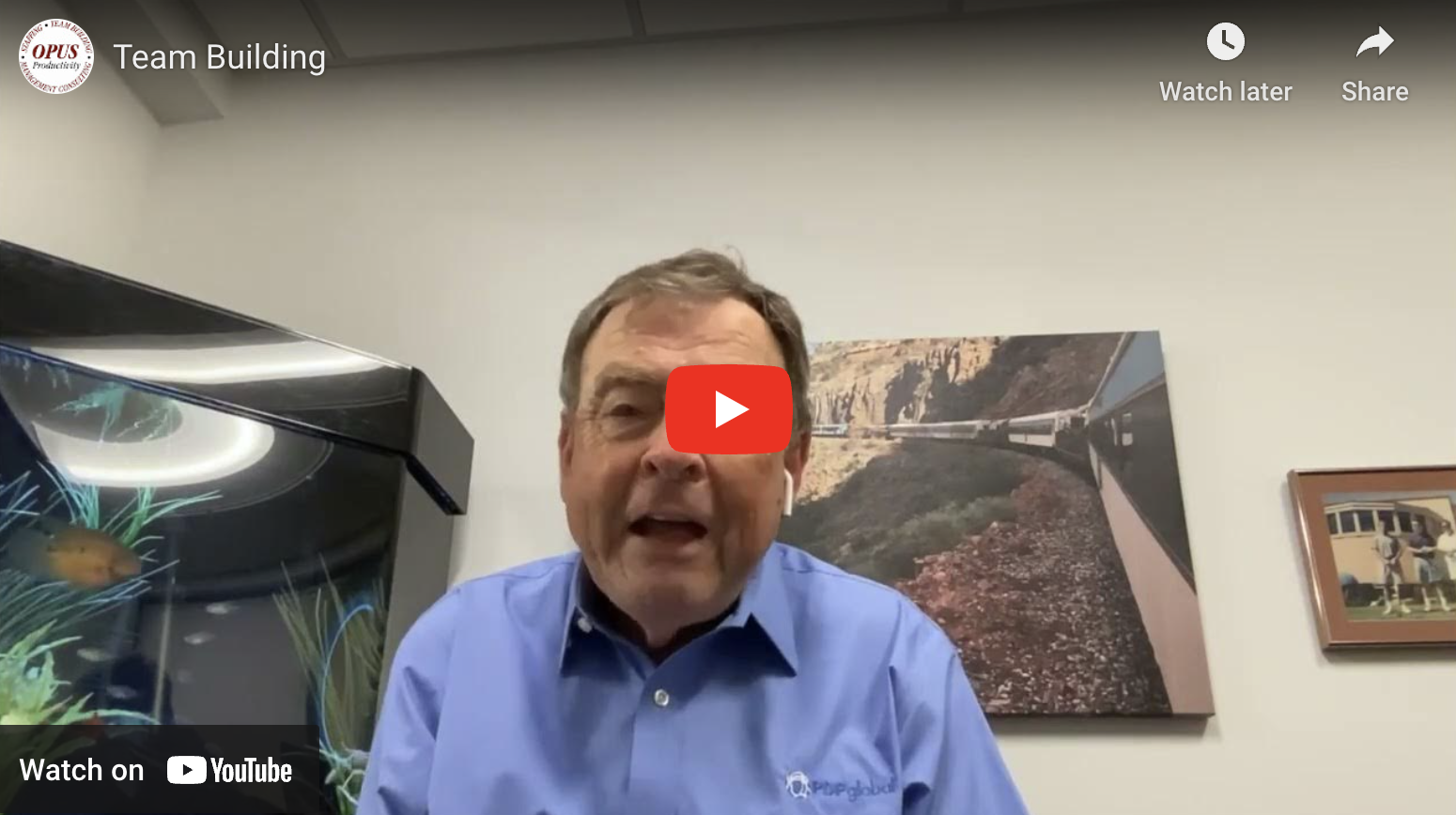
June 20, 2011 – 2:26 pmI’ve lined myself up in front of fish tank on purpose for this particular video because the fish are going to be part of the story. I know many of you read the transcript and enjoy following the blog that way and I think that’s great. But I also know many people watch the video, and I’ve heard that you like to see the fish. So, go ahead and watch the fish while I talk if you like. But the other reason is because we talk about putting people into environments that really suit them well. And that we have the right type of person in a job and in an environment that really does match up well with them.
So, I was talking to a candidate about this and how it all kind of ties together and I said, you know, you can be a beautiful fish but if you are a fresh water fish and you are put in a salt water tank, you’re not going to do really well. And if you are a cold-water fish and you are put in a warm water tank you’re not going to do really well. So, it has nothing to do with the beauty and the quality of the fish. You need to put the right fish in the right kind of tank. And you need to put the right type of people in an environment that suits their behavioral nature, and provide them with the kind of coaching and the mentoring that suits their needs.
Yes, there are many different ways to get jobs done and different behavioral styles can definitely be successful in the same environment. But you the manager make the difference because you know how to create the environment that just like putting a fresh water fish in a fresh water tank and a salt water fish in a salt water tank. Hope this makes sense. Thanks for your time, thanks for listening.
Tags: behavioral nature, behavioral style, Environment, Job, Opus Productivity, Opusbob
OPUSBOB: On Effort and Enthusiasm
June 2, 2011 – 9:15 amI want to talk to you today about when you’re thinking about how much effort you put into what you do, and whether or not anybody actually notices. The reason for this story is because I had an opportunity to talk with the candidate just recently and they said to me, “hey Bob, you really like what you do, I can tell you really enjoy it. And this was a very interesting time for me to learn about myself. I went through this one other time and it was so obvious that the person who was reviewing my profile with me was bored. They just mailed it in and there was nothing that I really got out of that experience.” And it made me realize that people really do see the difference. People can recognize when you’re putting forth an effort to make it special and to make it good.
There are repetitive aspects of everybody’s job. Think about the Broadway actor who is playing Hamlet and needs to read “To be or not to be” six nights a week and for two matinees. But just as every single audience is different, every single candidate is different, every single client is different and you need to look what you do in the eyes of the people that you’re delivering your work for — embrace how they will feel about it, look at how they will view it and you’ll be able to move beyond any aspect of repetitive boredom.
Really enjoy and embrace what you do. There is so much pleasure in what we get to do and how we’re able to work with people. You need to take advantage of that, just like the sign says at my pet store that we visit, Bark Less, Wag More. Thanks for your time.
Tags: Business Leadership, candidate assessment, Effort, Enthusiasm, Opus Productivity, Opusbob, Performance
OPUSBOB: 3 Ways to Gain Information from your Candidate
May 12, 2011 – 11:26 amYou’re going to notice that I’m a little bit dressed up for today’s video blog and the reason for that is because we are going to role play a job interview and I’m the candidate, so you know I got to look good for my role play. What I’m going to do is I’m going to answer some questions that get asked sometimes in a sales interview and then comment about the three ways that we can really take advantage of gaining information about our candidate, questions certainly being one of them.
So, here we go:
Candidate:
Oh yes, I’m a very good hunter. I love to hunt, oh hunting that’s the best part of sales. Oh, sure be happy to share an example with you. It was Pierre Cardin Eyeware Designs, they are at 485 Madison Avenue. Yeah, they actually shared a floor with Mad Magazine. I never did see Alfred Newman but I wonder whether it was there but, you know. I knocked on their door actually called them first, got their name on a list. Had a chance to talk with the president of the company, a nice Frenchman by the name of Yves Farigier and took him through the whole sales cycle, ended up closing the deal and they became one of my key accounts in Manhattan and it became a great reference. Love hunting, just love hunting.
I’m an excellent closer, excellent closer. Let me tell you a great story. It was 3D Bed and Bath, Bernie Abraham, he was the CEO. I took my CEO to meet Bernie and Bernie just beat the heck out of my CEO. We are having some money problems at the time and Bernie was concerned about that. So, on the way back to the office my CEO let me have it. He told me these guys are not ready to buy from you. They are never going to buy, why did you waste my time for blah, blah, blah. Well, the next day I got to Bernie’s office at 5:30 at night and three hours later I’ve got a signed contract and a 10 percent deposit on two computer systems. I’ve got great closing skills.
Competitive, oh yes I’m a very competitive guy, absolutely. In fact let me share with you. I played Varsity Tennis for four years and I wasn’t that good and I lost plenty of matches to guys that were better than me. But if it was close I was going to win. We played best of three sets and there wasn’t one match in my four years that if went to a third set that I didn’t win. I’m as competitive and I’m as tough as you’ll find anybody.
Okay, time out. So, pretty classic interview questions that get asked. Are you a hunter or farmer? Are you a good closer? Are you competitive? And although they are not bad questions I much rather see you utilize your questioning time to get to information that you can’t get other ways. You can find out whether somebody is a hunter or a farmer by looking at their behavioral profile. Let’s face it, the behavioral profile is not going to lie and there is a very specific difference in what a hunter is and what a farmer is. You can go watch the Opus blog, it talks about them. Ask your candidate these questions and they are going to tell you what they think you want to hear. But you can get good answers to questions. Not every question is going to be positioned that way.
Ask them about how their pipeline got built when they worked at ABC company.
They are going to tell you and that will lead to whether that ties into how you built your pipe line.
Ask them about the nature of the competitive environment.
- Who do they compete with?
- How did they win against that competition? (Ask this in order to learn how they sold in that situation.)
Ask about the nature of the complexity of the sales process.
- Who did they sale to?
- Who did they need to meet with and how did that work?
What you’re trying to find out in your questioning is how similar a world has this person come from, as it relates to their behavioral nature. Are they a good closer? Are they a hunter? Are they competitive? Utilize the behavioral matrix that you have at your fingertips and utilize your power of observation.
You do not have to ask anybody whether they are a good closer or not. See if they close you. Ask yourself, if this person were a good closer what would they be doing right now in the interview process. Because a good closer doesn’t just mean that they ask for the job. It means that they ask for the job when they have earned the right to ask for the job and they are trial closing all along. Use your power of observation as it relates to closing skills, listening skills, speaking skills. Use the behavioral matrix to have a clear understanding to the behavioral nature of the candidate and ask questions that shed light on how the person has been involved in an environment that most likely mimics the environment that you will be putting them in. Thanks for your attention.
Tags: behavioral matrix, behavioral nature, behavioral traits, candidate, candidate assessment, closer, closing skills, competative, competative environment, hunter, Interview, Interview questions, interviewing, job interview, listening skills, sales process, speaking skills
OPUSBOB: So Maybe You Don’t Suck After All
April 5, 2011 – 10:39 amAs I think you all know, I have an opportunity to talk to people every day about their personality style and their personality profile. And many people look forward to the conversations, and many people, especially candidates, are a bit nervous about what the profile is going to say about them. And lo and behold, in the eyes of the beholder the profile is seen as a positive picture of their personality style. And the reason is because it focuses on the strengths of the individual, what the person does well. And if that is what you do well, be it a relationship builder, or create harmony, or create process, all of those things make you feel good about yourself. And so it’s really common, at the end of the conversation, that the individual will say to me, “Gee, I’m not as bad as I thought I was”. I laugh and I say, “Well, yeah. You know, you’re not. In fact, there are a lot of really positive things about your personality and there are a lot of things that you can be very effective in doing.” The conversation turns out to be very much an affirmation of the individual’s strengths and it feels good. It feels good for them. I have to tell you it feels good for me, too, because we’re talking about positive things and it’s very relevant because we can build and grow from our strengths much faster, much more effectively and have a lot more fun doing it, than always worrying about what we do wrong. You know, I think we heard enough about what we did wrong when we were kids. It’s time to move beyond that. And, yes, I know we sometimes have that little boy or little girl on our shoulder telling us that we suck, but you know, there is more to life than that. If you can truly embrace what you do well and what your strengths are, then you can actually take on those things that you’re not as comfortable with, and recognize the need to consciously adapt your behavior to deal with those things, but celebrate the fact that you actually bring a lot of strengths to the table. So it’s true, maybe you don’t suck as much as you think. Did you ever think of that? You should. Thanks for your time.
Tags: Bob Kreisberg, Opus Productivity, Opusbob, personality, profiling, results, strengths, style
OPUSBOB: The Person Behind the Mask
March 16, 2011 – 6:48 amI saw this mask when I was out shopping with my wife for the holidays and, of course, like anything, whenever I see something like this my thoughts always go to business. I thought about a kid holding this up like this and thinking that the person whom you get to see is the mask, not the real person. And I got to thinking about this as it relates to the hiring process because, let’s face it; whenever a candidate comes in to see us, no matter what they may say about wanting to be sure that it’s a good fit for them, too, people put on a mask, and that mask is what they think you want to see. It’s just human nature and it can be very difficult for us to decipher whether we’re looking at the real person or if we’re looking at the mask.
One of the tools that we provide to help you with this is the Behavioral Profiling tool that breaks out for you the basic, natural self, as in who the real person is, and then how we get to see that person. Think about how relevant that is for you when you’re trying to make a hiring decision, because is it the person with the mask who is going to show up or is it, in fact, the real person? And we know that in terms of providing motivation, guidance, leadership, coaching and everything else, it needs to be the real person whom you’re motivating not the mask. Thanks for your attention, I look forward to being with you again.